How to Pack a Kitchen Safely: Dishes, Glasses and Knives
To pack a kitchen safely, start early, sort and declutter first, use sturdy small boxes, wrap each fragile item individually, pack heavy items at the bottom and light items on top, fill every gap with padding and label each box clearly. The kitchen is usually the hardest room to pack because it holds many fragile, awkward and heavy items. Plan on more time than you expect, and pack the items you use least first.
Gather supplies
- Small and medium sturdy boxes (heavy items go in small boxes)
- Dish or cell boxes with dividers, if available
- Packing paper, not newspaper for items with delicate finishes
- Bubble wrap for glassware and stemware
- Packing tape and markers
- Towels and linens for extra padding
- Zip bags for small parts
Step 1: Declutter first
Donate duplicates, broken gadgets and expired pantry items. Fewer items means fewer boxes and a lower moving cost.
Step 2: Pack in stages
- Rarely used items, such as serving platters, holiday dishes and specialty appliances
- Pantry items and small appliances
- Everyday dishes and cookware
- An "essentials" box for the final days
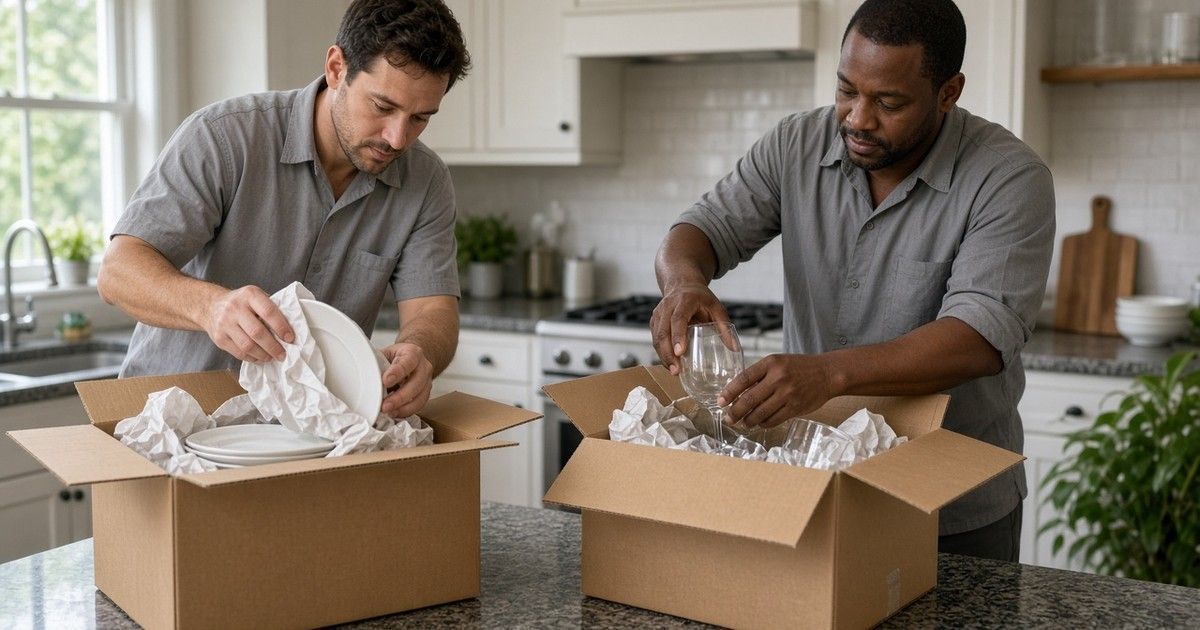
Step 3: Pack dishes properly
- Line the bottom of the box with crumpled paper.
- Wrap each plate individually, then stack and pack them on edge, like records, rather than flat.
- Place heavier dishes on the bottom and lighter ones on top.
- Fill gaps so nothing shifts, then add a final layer of paper on top.
Step 4: Pack glasses and stemware
- Wrap each glass individually and stuff the inside with paper.
- Pack upright with stems protected and padding between pieces.
- Use divider boxes where possible.
- Label as fragile.
Step 5: Pack pots, pans and heavy items
Nest pans with paper between them and use small boxes so weight stays manageable. Cast iron is heavy; pack it alone or with only a few items.
Step 6: Knives and sharp objects
Wrap each blade in thick paper or a cloth, secure it and label the box so nobody reaches in unaware. A knife block can be wrapped and boxed whole.
Step 7: Small appliances
Clean and dry them, wrap cords, and use original boxes if you still have them. Remove glass carafes and blenders jars and pack them separately.
Step 8: Food and pantry
- Pack unopened non-perishables in small boxes.
- Seal opened items tightly in bags.
- Do not pack perishables or liquids that could leak without protection.
- Plan to use up the freezer and fridge before moving day.
Step 9: Appliances
If a refrigerator or range is going with you, empty and clean it ahead of time and check what preparation is needed, such as defrosting, and securing doors. Movers Near Me, LLC moves appliances, so tell us if yours are coming along.
Step 10: Label everything
Mark each box with the room, "kitchen," and a short list of contents. Mark fragile boxes on multiple sides. See our box labeling guide.
Should you hire packing help?
If you are short on time, our packing and unpacking service can handle the kitchen or the entire home. Our article on whether moving companies pack for you explains how pricing typically works.
Packing the kitchen in order
- Start with rarely used items. Specialty appliances, serving dishes and extra glasses can go first.
- Pack pantry food next. Use up what you can and pack unopened items in small boxes.
- Save daily dishes for last. Keep a small set of plates, cups and utensils available until the end.
- Clean appliances. Empty and dry the refrigerator and other appliances before moving.
Common kitchen packing mistakes
Overloading boxes with heavy items, leaving gaps that let dishes shift and mixing fragile items with heavy cookware are the most common problems. Use smaller boxes for heavy items and clearly label which boxes contain fragile glass.
How to pack knives for moving
Packing knives safely protects both the knives and the people handling the boxes. Wrap each blade in several layers of paper or cardboard, tape the wrapping closed, and group wrapped knives in a small box or a knife roll. Label the box "sharp knives" so no one reaches in carelessly. For a block, remove the knives and wrap them separately, then pack the block in a box with padding. Never pack loose knives in a drawer organizer without protection.
Kitchen items that need extra thought
- Glassware: use dividers or wrap each piece, and fill empty space so nothing shifts.
- Heavy cookware: use small boxes so they are not too heavy to lift.
- Liquids and opened food: use up what you can, seal containers and bag leaks.
- Appliances: empty and dry, and secure cords.
- Everyday items: set aside plates, cups and utensils to unpack first.
If you would rather not pack the kitchen yourself, see packing and unpacking. For labeling tips, read how to label moving boxes.
More questions people ask
How many boxes will my kitchen need?
It depends on your belongings. Rather than guess, pack one cabinet and count the boxes it takes, then multiply by the number of cabinets.
Should I move food?
Move unopened non-perishables and use up perishables beforehand. Check any rules from your mover about what they will transport.
How to pack a first-night kitchen box
Pack one clearly labeled box or tote that you can open immediately at the new home, and keep it with you or load it last. A practical first-night kit includes a few plates, bowls and cups, flatware, a dish towel, a sponge, trash bags, a pot or skillet, a baking sheet, coffee or tea supplies, a can opener, salt, oil, snacks and any medications that live in the kitchen. Add paper towels and a basic cleaner so you can wipe shelves before you unpack.
Defrost and dry the refrigerator and freezer in advance so they do not leak in the truck. Disconnect a gas range only if you are qualified, or arrange for a technician. For water lines on a refrigerator or dishwasher, turn the supply off and cap lines as needed. Movers Near Me, LLC moves appliances, so mention them when you ask for an estimate. See packing and unpacking if you would rather leave the kitchen to a packing crew.
How should I pack knives and sharp tools?
Wrap each blade in several layers of paper or a towel, tape the bundle closed and mark it "SHARP." Lay knives flat in a box, never with the blade pointing up. A knife block can be wrapped as a unit if the knives stay seated. Keep the box where unpackers will see the warning.
Frequently asked questions
Can I use towels as padding?
Yes, towels and linens add padding and save on paper.
What should I leave for last?
An essentials box with a few plates, utensils, a pan, coffee supplies and cleaning items.
For more help, read how to prepare for movers.
Movers Near Me, LLC is based in Candler, NC and holds North Carolina mover certificate C-2921. Call (828) 365-8056 or request a free quote.